 Gemloom
- Home
- Gemloom Research
Gemloom Research
We publish the engine's daily data and our methodology: how value depressions are identified, how the AI review council votes and when it vetoes, and how automated trading acts at the key moments.
Methodology
Methodology 1
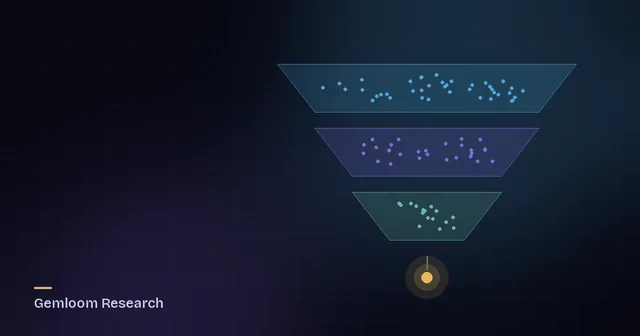
Value Depressions: How Gemloom Finds Overlooked Small-Cap Coins
A deep drawdown is not the same as cheap. This paper describes the three-layer framework Gemloom uses to find what we call value depressions: first confirm a coin is tradable, then measure where its price sits, then check for catalysts and risks. We only study small-cap Binance spot coins that pass all three layers, and we explicitly exclude the rest — above all, coins that are still sliding, which we call abandoned rather than overlooked.
Methodology 2
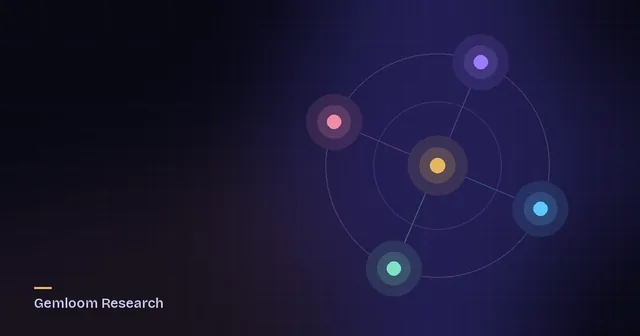
The AI Brain's Review Council: Why We Ask the AI Four Times, From Four Opposing Roles
When an AI judges a coin in a single pass, the usual problem is not a lack of intelligence but a lack of pushback. Gemloom's review council has the AI play four roles with different jobs: a fundamentals analyst, a skeptic, a technicals reviewer and a risk officer. Each role is a separate call that reads the same evidence and independently gives a stance, a confidence level and its reasons. The system then counts votes according to the risk level you choose, and the risk officer can veto any trade on a red flag. This paper explains the motivation, the process and the limits of the design.
Methodology 3
Key Moments: How Automated Trading Keeps Discipline at Entries and Exits
Finding a value depression is only the start. Most of the profit and loss in small caps happens at a handful of key moments: the first buy after a coin passes review, the second buy on a pullback, the staged sells on the way up, and the exit when a stop is hit or a delisting is announced. This paper describes how Gemloom turns those moments into rules that the engine carries out around the clock.
Methodology 4
Why We Only Do One Thing: The Boundaries of a Vertical AI Trading System
Gemloom is not a platform that tries to do everything. We only study small-cap Binance spot coins that sit near their price floor, we only trade in your own account, and we never use leverage. This paper explains where those boundaries come from, what we gave up because of them, and why we believe focus is itself a form of risk control.
Research log
RSS feed
Research Log No. 11
Value Depression: A Deep Drop Doesn't Mean Cheap; Three Hurdles Screen Out Neglected Coins
A deep drop doesn't mean cheap. CoinSpider defines 'value depression' as a price at a long-term low, with real trading still present, and the possibility of renewed attention; all three are indispensable. Today's potential board POLYX is 73% below its peak, with a potential score of 59. The component scores show that bottom patterns and volume are acceptable, but concept attention and cross-exchange anomalies are low, placing it in the 'neglected' rather than 'abandoned' category. The coin selection funnel is extremely strict: only 1 out of 519 trading pairs passed hard filters; the review council passed 15 signals, but the sample still needs accumulation.
Research Log No. 10
Recording Unknowns Separately: Uncertainty in the Tenth Research Log
Today we record which conclusions cannot yet be drawn from three angles: missing data, AI disagreement, and insufficient sample size. The latest scan passed 74 targets, while the review council passed only 27; most of the top 10 on the potential board have no review approval record; there is only 1 closed signal, and a 100% win rate has no statistical significance. We make these uncertainties public to prevent the research log from being mistaken for trading signals.
Research Log No. 9
Position Diversification: Small Positions in Many Coins, Using a Few Successes to Cover the Cost of Failures
Today's topic is position sizing and diversification. In the latest full-market scan snapshot, only 8 of 519 Binance USDT spot trading pairs passed all hard filters. In the past 24 hours, the review council sent 19 to review, passed 13, and the Risk officer had the most buy votes. Live trading has only 1 closed signal, with a 100% win rate and 9.89% average return, but the sample is too small to draw conclusions. We insist on small positions in each coin, diversified across multiple coins, using a few successes to cover the majority of failures.
Research Log No. 8
Execution Discipline: Round-the-Clock Rules Outperform Human Emotions
This issue focuses on execution discipline. The coin selection funnel shows that among 519 Binance USDT spot trading pairs, 268 have market caps within the research range, and 68 pass all hard filters. In the past 24 hours, the review council sent 8 cases to review, approved 7, and issued 1 red-flag veto. The four reviewers lean toward buy, but remain wait-and-see or avoid on some targets. Live trading has only 1 closed signal, a very small sample, but the exit reason was a preset take-profit. Around-the-clock automated execution helps avoid human emotional interference.
Research Log No. 7
Red-Flag Veto: Why Recent Large Unlocks Are Directly Excluded
Today's scan snapshot shows that among 516 USDT spot trading pairs, 267 have market caps within the research scope, and 67 pass the hard filters. In the past 24 hours, the review council sent 8 cases to review, with 1 red-flag veto (recent large unlock) and 2 approvals. We discuss the evidence requirements for the red-flag veto, and why we would rather miss out than make a mistake when facing large unlocks. The sample size is small, and conclusions are for reference only.
Research Log No. 6
Multi-Agent Review: How to Filter Noise Through Disagreement
Today's review council sample is very small: over the past 24 hours, 2 were sent to review and 1 was approved. The four reviewers' stances diverged: Fundamentals analyst and Risk officer each had 1 wait, while Skeptic and Technicals voted buy in both cases sent to review. The value of multi-agent review lies not in unanimity but in putting disagreements on the table, with Skeptic specifically tasked to find flaws. The potential board is a rule engine's preliminary screening: of the 69 coins that passed hard filters, only 2 entered review, and ultimately 1 was approved. The sample is too small to draw conclusions, but the mechanism itself is worth recording.
Research Log No. 5
On-chain capital is only a clue: the boundary between today's whale transfers and review evidence
Today's scan covered 516 Binance USDT spot trading pairs, of which 268 had market caps within the research scope, and only 1 passed all hard filters; in the past 24 hours, the review council sent 3 to review and approved 2. Among on-chain large transfers, there were 12 whale-to-whale transactions totaling USD 1.54 million across 6 tokens. We treat on-chain anomalies only as bonus points and review evidence, not as buy signals. There is only 1 closed signal, and the sample is too small to draw conclusions.
Research Log No. 4
Token Economics and Unlock Selling Pressure: Today's Scan and Review Council
Today's snapshot: 516 trading pairs on Binance USDT spot, 267 within market cap range, 67 passed hard filters; in the past 24 hours, the review council sent 11 cases to review, approved 7, and red-flag vetoes 0. In the top 10 of the potential board, most coins have high token economics scores, with EIGEN at only 3.0. On-chain large transfers are few in number and small in amount, and there is only 1 closed live trading signal, so the sample is insufficient and no conclusion can be drawn yet.
Research Log No. 3
Sector Observation amid Quiet Bottom Conditions: Potential Board Top 10 and Narrative Rotation
In the latest scan, among 516 Binance USDT spot trading pairs, 69 passed the hard filters, but in the past 24 hours the review council sent 0 to review and passed 0. In the top 10 of the potential board, the gaming sector includes ILV, YGG, and GALA, and their declines below peak are generally large; today's strong sectors include HODLer, Meme, AI, and gaming. The sample size is very small, so this is for observation only and does not constitute investment advice.
Research Log No. 2
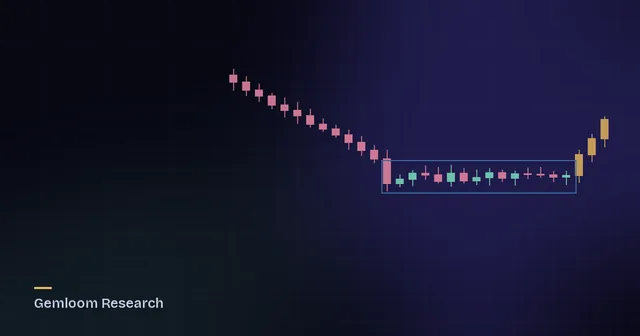
How Does Bottom Formation Affect Today's Potential Board and Review?
Today's scan of 516 Binance USDT spot trading pairs found only 4 passing all hard filters. Among the top 10 on the potential board, POLYX and SC have higher bottom-formation scores. The review council opened 4 cases and approved 2, with no red-flag veto; the Technicals reviewer cast 3 buy votes and 1 wait vote. The publicly approved signals GALA and C98 each received 4 votes. The sample size is small; observe cautiously.
Research Log No. 1
Liquidity: The First Hard Filter for Bottom Coin Selection
This research log focuses on the significance of liquidity for bottom coin selection. Today's scan shows that among 516 Binance USDT spot trading pairs, only 14 passed all hard filters, and 63 were filtered out due to insufficient or unstable liquidity. Some coins on the potential board have low volume scores, and the Technicals in the review council produced hold votes. The sample is limited, and conclusions should be cautious.