Gemloom
Research Log No. 11Topic: Value depressions
Value Depression: A Deep Drop Doesn't Mean Cheap; Three Hurdles Screen Out Neglected Coins
A deep drop doesn't mean cheap. CoinSpider defines 'value depression' as a price at a long-term low, with real trading still present, and the possibility of renewed attention; all three are indispensable. Today's potential board POLYX is 73% below its peak, with a potential score of 59. The component scores show that bottom patterns and volume are acceptable, but concept attention and cross-exchange anomalies are low, placing it in the 'neglected' rather than 'abandoned' category. The coin selection funnel is extremely strict: only 1 out of 519 trading pairs passed hard filters; the review council passed 15 signals, but the sample still needs accumulation.
Key points- A deep drop doesn't mean cheap; bottom patterns, volume, and the possibility of renewed attention must be jointly verified.
- The coin selection funnel narrows from 519 trading pairs to 1 passing hard filters, which then enters the AI review council.
- The review council passed 15 signals; the Risk officer's stance was buy 13, wait-and-see 3, avoid 3, but the public track record sample is extremely small, so no conclusion can be drawn.
Why a Deep Drop Does Not Equal Cheap
In CoinSpider's framework, 'value depression' does not simply mean 'a big drop'. If we only look at the drop from the peak, many coins meet the condition, but most of them may have already been abandoned by the market: thin trading, no signs of renewed attention, or major fundamental problems. We believe that a 'neglected coin' must simultaneously meet three conditions: price at a long-term low, real trading still present, and the possibility of renewed attention; all three are indispensable.
Taking POLYX, which tops today's potential board, as an example, it is 73% below its peak, with a potential score of 59. The drop is indeed deep, but that alone cannot determine whether it is cheap. The component scores deserve more attention: bottom patterns 18.8, volume 9.0, valuation 7.3, concept attention 6.0, tokenomics 10.0, cross-exchange anomalies 2.0. The scores for bottom patterns and volume are moderate, suggesting that it may still be actually traded, not completely ignored; however, concept attention and cross-exchange anomalies are low, meaning the signal of renewed market attention is still weak. Therefore, POLYX currently looks more like a 'neglected' candidate rather than an 'abandoned' one.
From 519 to 1: How the Coin Selection Funnel Screens
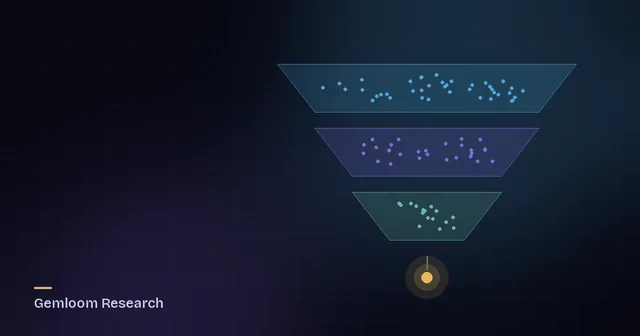
The coin selection funnel reflects how picky we are. The latest market-wide scan (note: a snapshot, not a cumulative for the past 24 hours) covered 519 Binance USDT spot trading pairs, of which 271 had market caps within the research scope, and only 1 passed all hard filters. Reasons for not passing include: market cap outside research scope 208, risk-tagged 168, not yet in a bottom region 32, insufficient or unstable liquidity 90, listing too recent 4. These numbers show that most coins were blocked by the rule engine before entering AI review, not because they didn't drop enough, but because other dimensions did not meet the basic definition of 'value depression'.
Only coins that pass hard filters enter the AI review council. In the past 24 hours, the review council had 19 cases sent to review and 15 passed. This funnel extends the standard of 'cheap' from a single drop metric to multiple dimensions: market cap, risk, bottom region, liquidity, listing time, etc. Figure 1 shows the overall path from 519 to 1, then to the review council's 19 sent to review and 15 passed.
AI Review Council: Stance Distribution of Four Reviewers
Only candidates that pass hard filters are presented to the four AI reviewers. In the past 24 hours, the review council had 19 sent to review, 15 passed, 3 red-flag vetoes, and 1 case with insufficient votes in favor. The reason for red-flag vetoes was entirely 'announced delisting or placed on monitoring'.
Figure 2 shows the stance distribution of the four reviewers over the past 24 hours: Fundamentals analyst buy 3, wait-and-see 0, avoid 0; Skeptic buy 3, wait-and-see 0, avoid 0; Technicals buy 2, wait-and-see 1, avoid 0; Risk officer buy 13, wait-and-see 3, avoid 3. The Risk officer's avoid and wait-and-see votes remind us that even coins passing hard filters may be blocked at the risk control level. However, the sample size is still not large, especially for Technicals with only 3 expressions of stance; for now, we cannot draw conclusions about reviewer preferences.
What It Means for Users and Current Limitations
For ordinary users, this entire process aims to answer one question: we only select coins that have dropped deeply, but are still actually traded, and have the possibility of renewed attention. Today's publicly disclosed signals that passed review include SAHARA, FLNCB, GMT, NEWT, VANA, FORM, GPS, ZBT, 8 in total, of which GPS had 0 buy votes and the rest had 1. These signals are only the result of the review stage and do not constitute investment advice.
In the public track record section, there is only 1 closed signal, with a 100% win rate and an average of 9.89% per trade, but with only 1 sample, it has no statistical significance. There are 13 signals currently held, which also need to wait for more results. The limitations are: only 1 passed all hard filters today, and the top 10 of the potential board only showed POLYX; sample sizes are too small in many stages to draw stable conclusions. We will continue to use the combination of rule engine and AI review to filter step by step, rather than treating 'deep drop' as 'cheap'.